The Curious Case of Lady Gaga
This hasn’t much to do with lyrics, but bear with me.
Lady Gaga confuses me. Her fans insist that she’s really musically talented, and they’re right.
I mean, good God. She can sing, she’s a first-rate pianist, and she can write her own stuff (all too rare in the pop world).
…And Of Course.
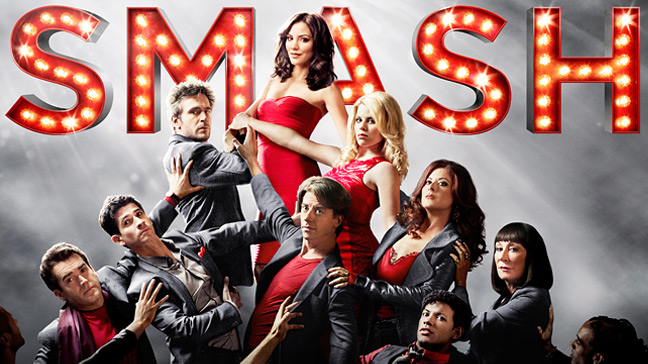
Selfishly ignoring my rabies-flecked post of a few days ago, the American public has gone and given Smash solid ratings for its pilot show, and believe it or not, I don’t begrudge it that. Despite what I said here, the “Smash” pilot wasn’t absolutely terrible, it was just mediocre. So why did I hate it? Because it seemed so bloody pleased with itself for being mediocre (though I am aware that in the humility sweepstakes, I live in what looks suspiciously like a glass house).
Rant: 5 Reasons I Hated The Pilot For "Smash" With Every Fiber Of My Being
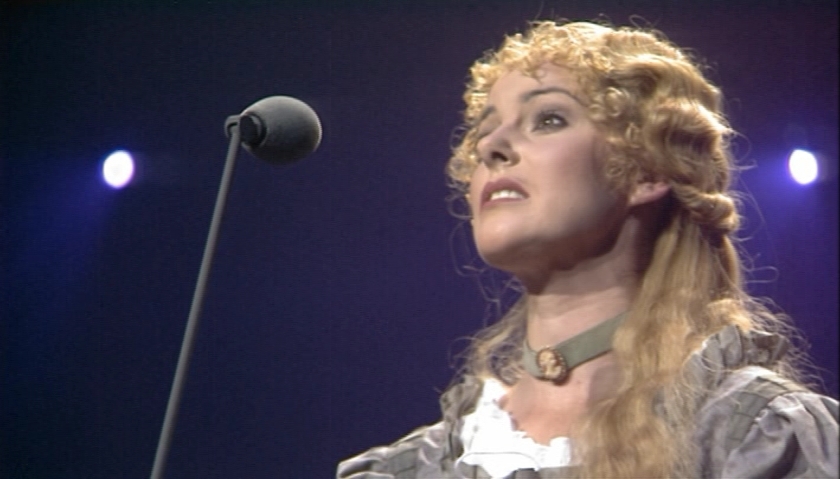
Meaningless Metaphors, or Fantine’s Tiger Problem
I understand; it’s very hard to make every single line of a song meaningful and interesting. Only a few lyricists (like Cole Porter) could ever consistently manage it. I also don’t mind metaphors and similes in lyrics, for they often serve a valuable purpose. That said, I frequently encounter lyrics in which metaphors and similes seem so fantastically pointless or out-of-place that one can only imagine that they were included as filler, a rickety bridge for moving the song from one idea to another.
An Overview of Collaborative Coherency in the 20th Century
(The following is adapted from an essay I wrote on the subject of the development of collaborative coherency (and songwriting in general) throughout the twentieth century. Naturally, this will be far from comprehensive, but I hope that it will serve to illustrate some of the concepts that I believe lie at the heart of lyric-writing.)
Often overlooked in the rush to praise instrumental music and poetry is the humble art form of songwriting. An institution probably as old as language itself, the practice of coordinating music and lyrics took great leaps and bounds in the 20th century, but in a manner rather different than those of its independent constituent parts. This is because of the inherently elaborate nature of the song. For many artists the relationship between music and lyrics is symbiotic, one of interplay rather than dominance of one over the other. Thus, not only should the rhythms of the music and the rhythms of speech in the lyrics match up, but the emphases in the music (be they of pitch, volume, duration, or what have you) should ideally correspond to similar points in the music. This form of coordination will be referred to from here on out as “collaborative coherency,” and understanding this concept and its development is essential to understanding the development of songwriting as a whole through the 20th Century; from the acceptable but inconsistent collaborative coherency of opera sprang a vast and disparate range of approaches, from Schoenberg’s rejection of collaborative coherency to Weill and Brecht’s refinement of it to a fascinating reconciliation of the two.
Read more
Pet Peeves: Syllable Fillers
The Necessity of Rhyming, or What Does It Get Ya?
The Tony Awards 2011: A Thought or Two
Case Study: "Iron Man" by Black Sabbath
This song, I think, needs no introduction. If you haven’t heard it before, hear it now. If you have, hear it again.